

Glorinda’s services
Anaerobic MBR
At Glorinda, we design and deliver boiler feed water and cooling water treatment systems that protect equipment from scaling and corrosion, keeping fuel consumption, downtime, and maintenance cost under control.
Anaerobic Membrane Bioreactor
Aerobic treatment removes organic load by consuming electricity and generates sludge that must then be removed. For high-strength wastewater, these two costs can represent a significant part of the treatment budget.
AnaeroMBR takes a different approach. It is an advanced anaerobic membrane bioreactor designed to treat high-strength industrial wastewater while generating energy. It combines a completely mixed anaerobic digester with Glorinda’s low-energy tubular ultrafiltration membranes. The organic load is converted into methane instead of creating a major energy demand, while sludge production is significantly reduced.
Your solution can be AnaeroMBR.
“We have no room for a bigger treatment plant”.
What problem does it solve?
AnaeroMBR is ideal for high BOD and high COD wastewater where lower operating costs, maximum conversion of organics into biogas, and reduced sludge production are required.
Benefits
Up to 98% COD removal
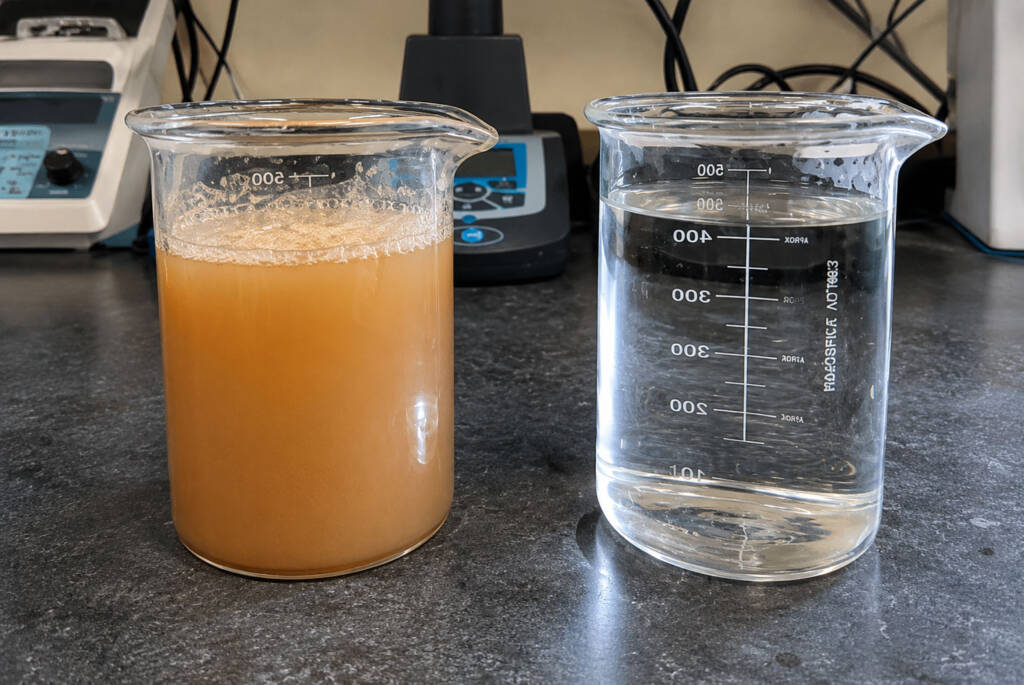
Superior effluent quality, ready for discharge or reuse. The comparison table below sets that against conventional anaerobic and aerobic MBR systems.
Maximum biogas production
Turns organic waste into renewable energy with high methane yields. Energy use is 1.5 to 2.5 kWh/m³ of net permeate output, with no aeration, flocculants or gas scouring required.
Up to 75% less sludge
Cuts sludge production by up to 75% compared with an aerobic process, which removes the second-largest operating cost on most high-strength plants.
Handles difficult wastewater
Tolerates high COD, TSS, fats, oils and grease, salinity and toxic compounds better than conventional anaerobic systems.
How it works
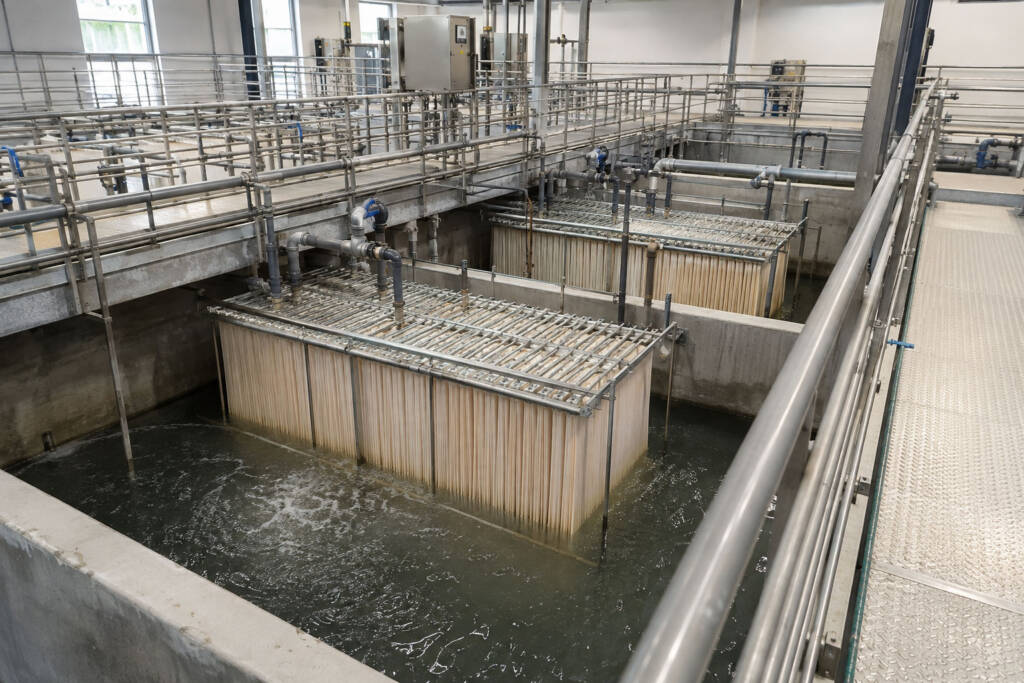
Two things are happening at once. A low-rate, completely mixed anaerobic reactor converts organic load to biogas, and a tubular ultrafiltration membrane holds the biomass in the reactor independently of how well it settles. That decoupling is what makes the process robust, as a conventional anaerobic system depends on granulation, and granulation is exactly what fails when the feed contains fats, oils, grease or salinity.
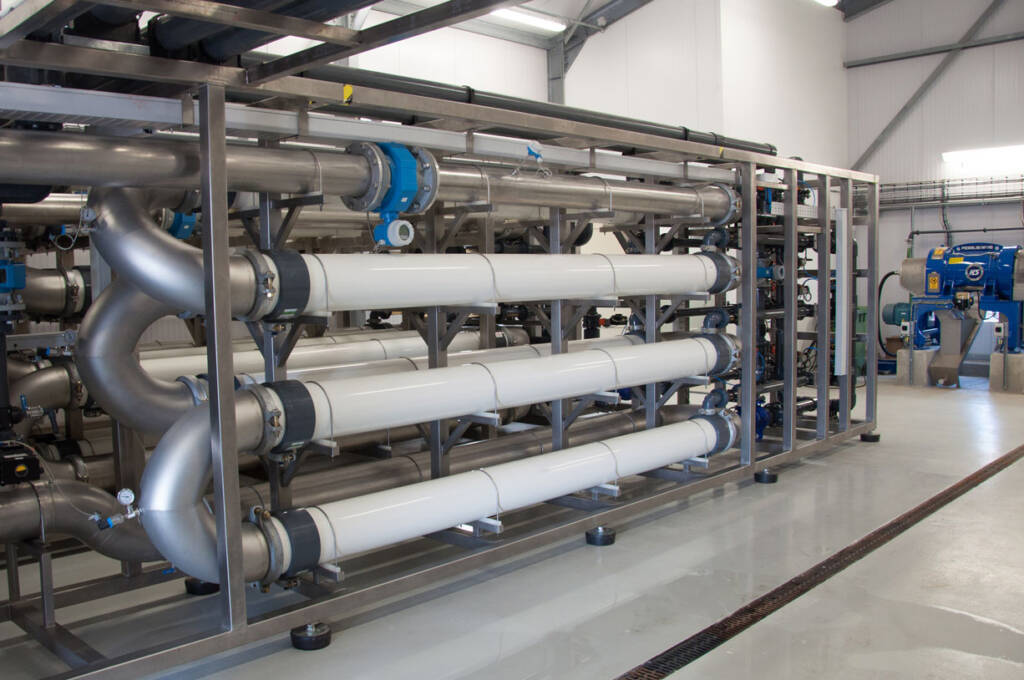
Because the membranes sit outside the tank, they can be inspected and serviced without entering a confined space or draining the reactor.
01
Feed and equalisation
High-strength effluent is buffered so that the reactor sees a stable load. Pre-treatment needs are minimal compared with conventional anaerobic systems, which is one of the main practical advantages.
02
Completely mixed anaerobic reactor
A low-rate, completely mixed reactor converts organic matter to biogas. Because biomass retention is handled by the membrane rather than by granulation, the reactor can carry a high solids concentration and tolerate a COD load above 250 g/L, far beyond what a UASB or EGSB configuration handles.
03
External tubular ultrafiltration
Glorinda’s low-energy tubular UF membranes separate the treated permeate from the biomass. The units are mounted outside the tank, dry and accessible, and are specified for eight years of membrane life. Net energy consumption across the process is 1.5 to 2.5 kWh per cubic metre of permeate.
04
Biogas recovery
Methane-rich biogas is collected and routed to the energy reuse cycle, a boiler, a CHP engine or upgrading, depending on what the site can use. This is where the operating cost inverts, as the process is net energy positive.
05
Permeate reuse or discharge
The system delivers crystal-clear effluent suitable for water reuse applications. Where a higher grade is required, membrane, ion exchange or EDI polishing follows.
| Feature | AnaeroMBR | Conventional anaerobic (UASB/EGSB) | Aerobic MBR |
|---|---|---|---|
| TSS / FOG tolerance | Very high | Low | Medium |
| COD load (g/L) | >250 | <15 | <10 |
| Biomass retention | Membrane-based | Granulation | Settling |
| Start-up time | Short | Long (seeding) | Moderate |
| Pre-treatment needs | Minimal | High | Moderate |
| Effluent quality | High | Variable | High |
| Maintenance access | External, dry | Internal | Submerged |
| System complexity | Modular, simple | Complex | Medium |
| Energy usage | Low, net positive | Low | High (aeration) |
| COD removal | Up to 98–99% | 75–90% | Up to 99% |
Typical usages
- Concentration of RO reject
- Streams carrying fats, oils and grease that upset conventional anaerobic systems
- Saline effluent where granulation fails
- Sites where sludge disposal is the dominant operating cost
- Retrofits where an aerobic plant is at its aeration capacity
- Compact sites with no room for a larger biological stage
Where this is used
AnaeroMBR is designed and customised for each customer’s wastewater. Glorinda develops tailored AnaeroMBR solutions for high-strength industrial wastewater across a wide range of industries, ensuring efficient treatment and energy recovery.
Oil, gas and petrochemical
Food and pharma
Agriculture and agro-processing
Textile
Municipal
Pulp and paper
Chemical
Where the cost of AnaeroMBR is actually decided
Selecting a process is an engineering decision, not a purchasing one. We run feasibility and pre-feasibility studies, characterise the stream, compare the routes on capital and operating cost, and act as owner’s engineer while somebody else builds it if that suits you better.
Related technologies
Minimum liquid discharge (MLD)
Around 85% recovery on membrane technology alone, at a fraction of thermal cost.
Open ENV · TechnologyMembrane & Filtration
UF, NF, ceramic and silicon carbide membranes selected against your actual foulants.
Open ENV · TechnologyAnaeroMBR
Treat high-COD load and produce biogas instead of paying to aerate it away.
Open ENV · TechnologyAOP & On-site H₂O₂
Generate hydrogen peroxide from water, air and power — no chemical deliveries.
Open ENV · TechnologySludge Management
Dewater, dry and where it pays, incinerate — cutting haulage before it starts.
Open ENV · TechnologyDesalination
Seawater and brackish water plants with pretreatment matched to the intake.
Open ENV · TechnologyBoiler & Cooling Water
Demineralisation, condensate polishing and blowdown recovery for utility systems.
Open ENV · TechnologyZero Liquid Discharge
Typically the final stage of treatment for high-salinity industrial wastewater.
Open ENV · TechnologyWaste Management
Incineration and leachate collection and treatment, with energy recovery built into both.
OpenFrequently asked questions
Energy use is 1.5–2.5 kWh per cubic metre of net permeate output, with no aeration, no flocculants and no gas scouring. Against that, the biogas produced makes the process net energy positive, and sludge production falls by up to 75% compared with an aerobic process.
Membrane durability is specified at eight years. The units are external and out-of-tank, so replacement and inspection do not require draining the reactor or confined-space entry.
No. Fast start-up is one of the reasons the system is chosen: no granular seed and no complex configurations are needed, and commissioning is rapid.
It tolerates high COD, TSS, fats, oils and grease, salinity and toxic compounds better than conventional anaerobic systems, because biomass retention does not depend on granulation. Send us an analysis and we will be specific about your stream.
Take this further
Send us the stream data, the discharge limit or the equipment list you are working from. An engineer reads every enquiry and replies with the questions that actually decide the solution, not a brochure.