


Glorinda Products
Glorinda Liquid Ring
Vacuum Pumps
Advanced liquid ring vacuum technology for the suction of gas and vapor in industrial processes. Four series, from compact direct-coupled pumps to heavy-duty and two-stage units, with suction capacities from 27 to 62,400 m³/h.
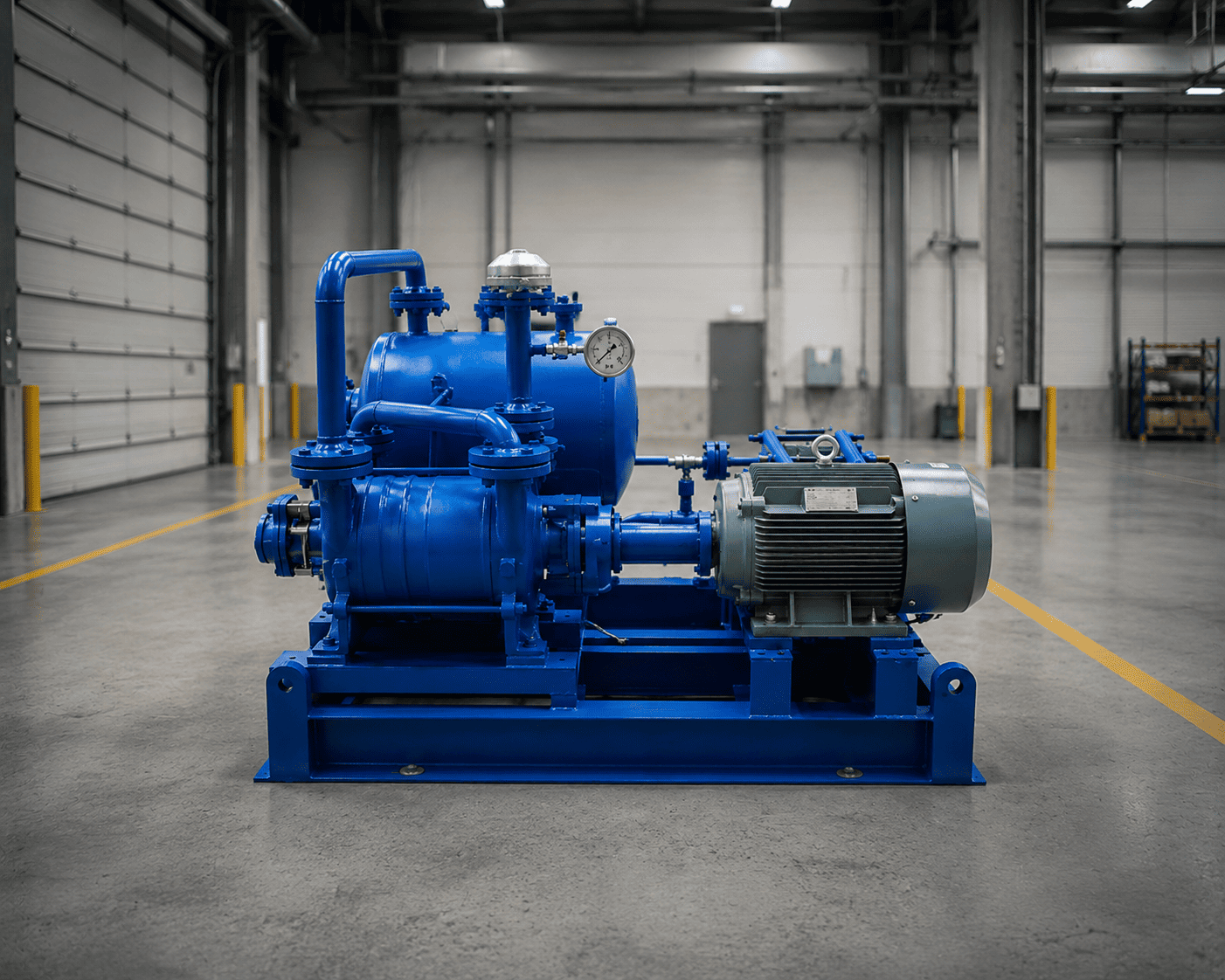
Glorinda’s
Liquid Ring Vacuum Pumps
Glorinda
Liquid Ring Vacuum Pumps
In a liquid ring vacuum pump, the rotor turns inside the casing without metal contact, surrounded by a ring of operating liquid, usually water. The water acts as both a liquid piston and a sealing liquid, drawing gas in through the inlet and pushing it out through the discharge port.
Glorinda offers single-stage liquid ring vacuum pumps in three series (compact / direct-coupled, energy-optimized and heavy-duty) and the DLV series of two-stage pumps for high vacuum. The pumps create vacuum and, depending on the series, can also operate as compressors.
Glorinda GmbH is an international holding company headquartered in Wiesbaden, Germany, delivering industrial services through its branches worldwide. All of these pump series are engineered and supplied by Glorinda.
Four pump series
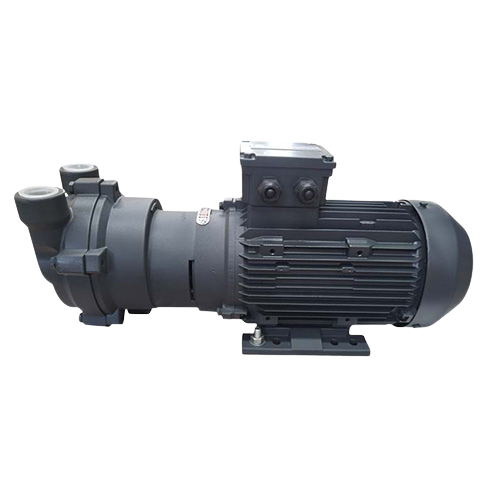
Single-stage · 27 – 500 m³/h
Compact / direct-coupled
Reaches 33 mbar (abs.), equal to 97% vacuum, and up to 0.26 MPa (abs.) as a compressor. Designed to replace conventional liquid ring and reciprocating vacuum pumps.
- Compact direct-coupled design, easy to install and space saving
- Cavitation protection port to reduce noise and protect the pump in high vacuum operation
- High-strength stainless steel impeller
- Optional stainless steel wetted parts
- Special models for explosive gases and hazardous environments
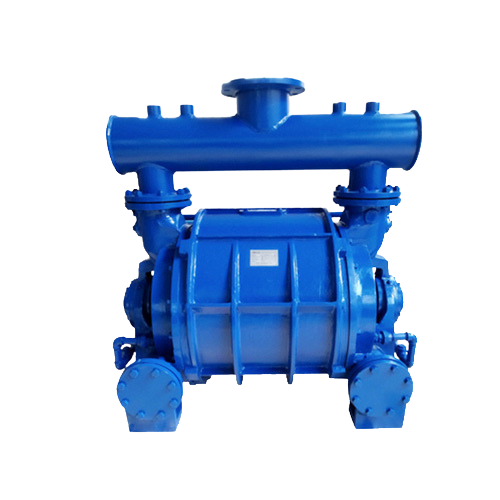
Single-stage · cone type
Energy-optimized
A conical suction and discharge port gives a wider flow area and lower resistance than flat port designs, for energy savings of up to 18% when pumping air and 28% when pumping saturated steam.
- No metal-to-metal contact between rotor and casing
- Water as liquid piston and sealing medium
- Strong, rigid impeller for continuous industrial duty
- Belt or direct drive
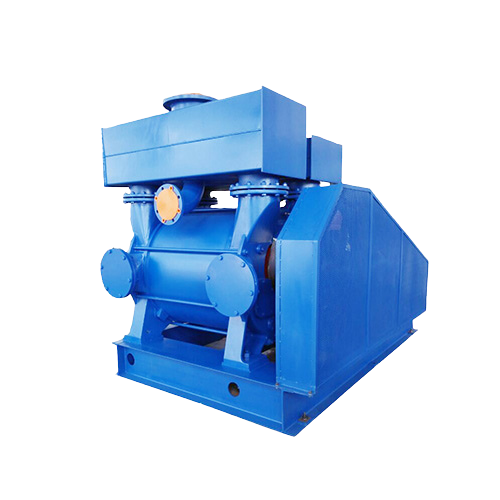
Single-stage · H1, H2, H3
Heavy-duty
Single-stage, single-function pumps for stable, reliable operation in tough industrial conditions, with large water discharge and changing load conditions.
- Simple, strong design for continuous operation
- Handles liquid carry-over and soft solids without internal damage
- Packed gland sealing as standard, mechanical seals optional
- SUS 304 shaft sleeves and safety guards
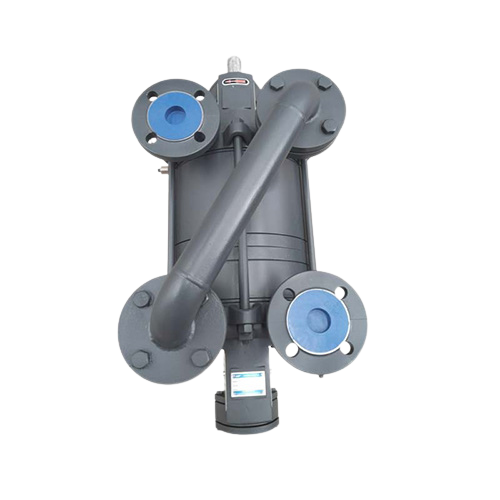
Two-stage · 110 – 1,717 m³/h
Two-stage (DLV series)
Designed based on the 2SK pump and advanced German double-stage design standards. Two compression stages give stable suction at high vacuum, with 35–40% higher efficiency in high vacuum than single-stage pumps.
- About 15–20% less energy than traditional two-stage pumps
- Carbon steel, stainless steel, duplex steel or titanium
- Single or double mechanical seals
- Supply from pump head only to complete closed-cycle systems
Models and ratings
Ranges for each series, taken from the catalogue technical tables. Capacity and power depend on speed and drive.
| Series | Models | Max. capacity (m³/h) | Ultimate vacuum | Speed (r/min) | Power (kW) | DRIVE |
|---|---|---|---|---|---|---|
| Compact /
direct-coupled GLRP-S1-C |
9 sizes,
25 – 63 standard and -E |
27 – 500 | 33 mbar (abs.) | 970 – 2,880 | Motor 0.81 – 15 | Direct-coupled |
| Compact /
direct-coupled GLRP-S1-O |
15 models,
140 – 560 V1 / V2 / V3 |
840 – 8,160 | V1 440 hPa V2 200 hPa V3 80 hPa |
300 – 1,170 | Motor 11 – 200 | Belt or direct |
| Heavy-duty H1
GLRP-S1-H1 |
23 models,
112 – 850 |
152 – 26,000 | 33 mbar
(160 mbar: 670, 750, 850) |
210 – 1,750 | Shaft 3.5 – 590 | Direct, V-belt, gearbox |
| Heavy-duty H2 / H3
GLRP-S1-H2/3 |
13 models,
25 – 100 |
2,300 – 62,400 | 160 mbar | 155 – 810 | Shaft 46 – 1,146 | Direct, V-belt, gearbox |
| Two-stage DLV
GLRP-S2-H |
11 models,
250/280 – 900 |
110 – 1,717 | 33 mbar (1.0 inHg) | 975 – 1,750 | Motor 3 – 75 | – |
Performance curves are based on atmospheric air at 20 °C (68 °F) and about 50% relative humidity, cooling water at 15 °C (60 °F) and a discharge pressure of 1013 mbar(a) (29.92 inHg). Data tolerance is ±10%. Other operating conditions may change capacity and power consumption; contact Glorinda for further technical details.
Choosing the right pump
Suction capacity depends on several factors, so the model should be selected based on the normal vacuum range. Special ranges can also be provided if required.
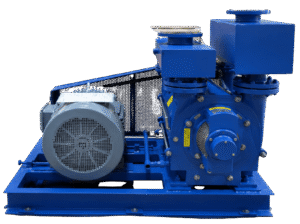
Cone type
For energy-optimized pumps, the cone code in the model name gives the vacuum range: V1 for low vacuum, V2 for medium vacuum and V3 for high vacuum. As power increases, suction capacity decreases.
Speed and drive
Many engineers prefer low-speed operation to improve stability and extend service life; it reduces suction capacity and energy consumption. If capacity needs to grow later, the motor can be replaced without changing the entire pump. Motor direct drive, V-belt and gearbox give different performance curves.
Temperature
Performance curves are based on an operating liquid temperature of 15.6 °C. A lower liquid temperature improves performance. With saturated vapor as the inlet gas, condensation in the operating liquid can further increase capacity.
Materials
The rotating liquid zone provides natural corrosion protection. Standard: ductile iron rotor on a steel shaft, cast iron cone and casing; small pumps may use bronze rotors. Options include acid-resistant bronze, full bronze up to GLRP-S1-O-300, SS304, SS316, SS316L and composite stainless steel and cast-iron designs.
Higher vacuum
For higher vacuum requirements, an energy-optimized pump can be connected in series with an air ejector. If the required vacuum is beyond the performance curve, the solution is provided based on project needs. The two-stage DLV series is built for high vacuum.
Hazardous gases
Compact pumps come in special models for explosive gases and flammable or hazardous environments, with -E models carrying dIIBT4 / dIICT4 explosion-proof motors. Heavy-duty pumps are used for compressing flammable, toxic and corrosive gases.
H1, H2 and H3, each for specific industrial needs
Mainly used to handle clean gases without solid particles and to create vacuum or pressure in closed systems. With suitable materials, the pumps can also handle corrosive gases or use corrosive liquids as the operating fluid.
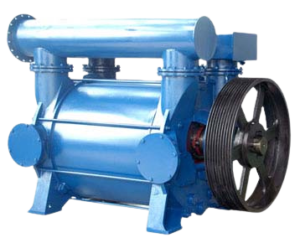
H1
Clean & non-corrosive gases
Creates vacuum or pressure in closed systems. Suitable for harsh working conditions with large water flow and load changes. With material changes, it can also handle corrosive gases or liquids.
H2
Stable, energy-saving operation
Special PTFE valve plates reduce over-compression and lower power use. Handles large amounts of condensable vapor, with a long service life due to low operating speed and strong internal design. Equipped with a gas-water separator and inspection window.
H3 · 2,000 – 32,300 m³/h
Upgraded efficiency
6–8% higher efficiency compared to earlier pumps. Lined pump body, flexible inlet and outlet connections and a large inspection port, for strict industrial environments.
- Simple, strong design for heavy-duty and continuous operation
- High efficiency with low energy consumption
- Available in different materials to suit various process needs
- Standard packed gland sealing, mechanical seals as an option
- Handles liquid carry-over and soft solids without internal damage
- Can operate with different sealing liquids
- Drive systems for both pulley-driven and coupling-driven types
- SUS 304 shaft sleeves to reduce shaft wear
- Safety protection guards made of SUS 304
- International standard surface treatment, including sandblasting and painting
Why Glorinda vacuum pumps?
One range, four series
Compact, energy-optimized, heavy-duty and two-stage pumps, from 27 m³/h up to 62,400 m³/h.
Materials for your process
From cast iron and bronze to SS304, SS316, SS316L, duplex steel and titanium.
Energy-Saving Design
Conical ports reduce flow resistance, saving up to 18% energy with air and 28% with saturated steam.
Warranty comes with it
Installation, start-up, repair and after-sales services, plus a warranty that always comes with our products.
Where it applies
Petrochemical
Chemical
Power plants
Sugar plants
Food & Pharma
Pulp & Paper
PVC & Polyester
Mining & Minerals
Textile & Metallurgy
Fertilizer
Flammable, Toxic & Corrosive Gases Compression
Frequently asked questions
Compact, heavy-duty H1 and two-stage DLV pumps reach an ultimate vacuum of 33 mbar (abs.). For compact pumps, this equals 97% vacuum. Energy-optimized pumps are rated at 440, 200 or 80 hPa depending on cone type (V1, V2 or V3).
Yes. Compact pumps reach a maximum pressure of 0.26 MPa (abs.) when operating as a compressor. Heavy-duty pumps create vacuum or pressure in closed systems and are used for gas compression, including flammable, toxic and corrosive gases.
Yes. Special compact models are available for explosive gases and for use in flammable or hazardous environments. Models with the “-E” suffix have motors certified to explosion-proof class dIIBT4 / dIICT4.
Heavy-duty pumps handle liquid carry-over and soft solids without internal damage, and the H2 model handles large amounts of condensable vapor. With suitable materials, heavy-duty pumps can handle corrosive gases or use corrosive liquids as the operating fluid.
Energy-optimized pumps save up to 18% when pumping air and 28% when pumping saturated steam, compared with flat port designs. The two-stage DLV series uses about 15–20% less energy than traditional two-stage pumps.
Glorinda’s headquarters are in Wiesbaden, Germany, with branches across Europe, the Middle East, Africa and the CIS.
Take this further
Tell us the gas or vapor you need to handle, the suction capacity and vacuum level you need, and whether you need vacuum or compression. Include your preferred drive, any material requirements, and whether the gas is explosive, corrosive or contains condensable vapor. We will use these details to prepare your quote.